Duc Pham
CTO ·
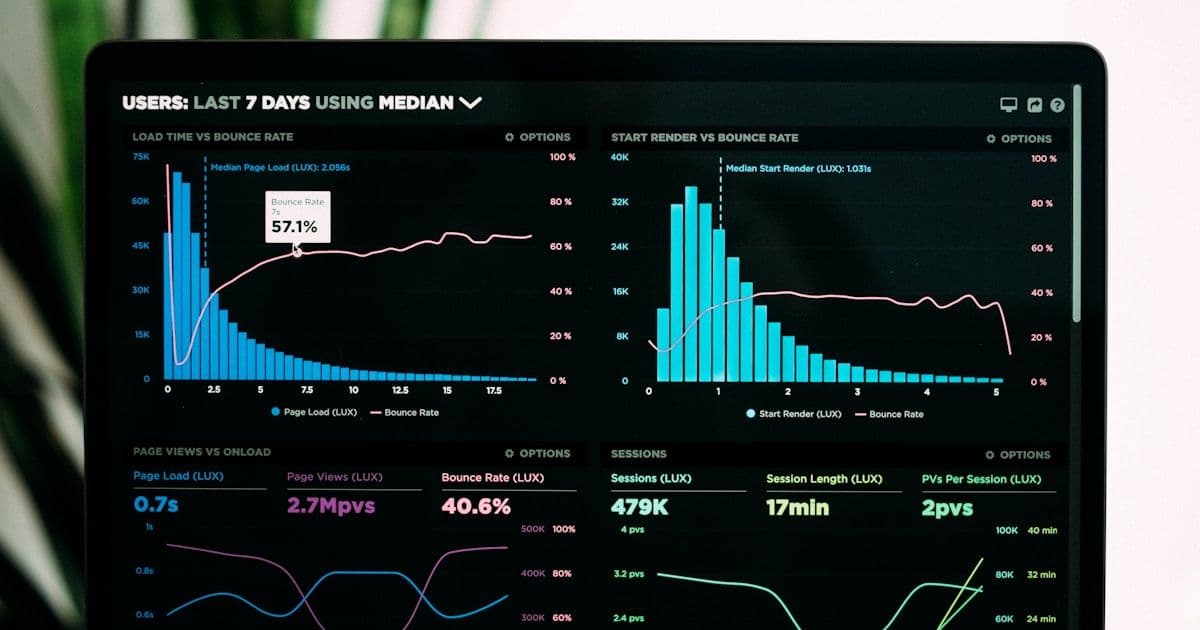
The AI industry has a dirty secret: most models ship with inadequate evaluation. Teams rely on a handful of public benchmarks, run a few cherry-picked examples past stakeholders, and call it done. Then they are surprised when the model fails in production on cases that seem obvious in hindsight.
Public benchmarks like MMLU, HumanEval, and MT-Bench measure general capabilities, but they tell you nothing about how a model will perform on your specific use case. Benchmark contamination is rampant — many models have seen test data during training. And benchmarks do not capture the failure modes that matter most: hallucination in your domain, inconsistency across similar inputs, or degradation under adversarial conditions.
Layer 1: Automated metrics. Start with quantitative measures — accuracy, F1, BLEU, ROUGE, or custom metrics specific to your task. These are fast, cheap, and catch regressions in CI/CD. But automated metrics correlate poorly with human judgment on open-ended tasks.
Layer 2: Expert evaluation. Domain experts rate model outputs on task-specific rubrics — correctness, completeness, helpfulness, safety. This is where most of the signal comes from. At SyncSoftAI, our evaluation teams design rubrics collaboratively with clients and maintain inter-rater reliability above 90%.
Layer 3: Red teaming. Dedicated adversarial testing where specialists try to break the model — eliciting harmful outputs, testing edge cases, probing for inconsistencies. Scale AI and Anthropic have published extensively on this, and it is now a requirement for responsible deployment.
Layer 4: Production monitoring. Real-time tracking of user feedback signals, output distributions, latency, and business metrics. This catches drift and degradation that offline evaluation cannot predict.
The most valuable evaluation asset you can build is a custom benchmark tailored to your use case. Collect real user queries, annotate gold-standard responses, include adversarial examples, and version it alongside your model. This benchmark becomes your ground truth and should grow over time as you discover new failure modes.
Evaluation should not be a one-time event. Every model update, prompt change, or data pipeline modification should trigger automated evaluation against your benchmark suite. Combine fast automated checks (minutes) with periodic expert evaluation (weekly/monthly) to balance speed and depth.
The teams that invest in evaluation infrastructure early ship better models faster. They catch issues before users do, iterate with confidence, and build the kind of trust that enterprise customers require. Evaluation is not overhead — it is the competitive advantage.

Discover seven proven strategies for boosting AI agent performance on benchmarks like OS-World and GAIA — from reducing LLM call latency and minimizing action steps to building modular multi-agent architectures and improving GUI grounding.
Discover how SyncSoft.ai's specialized data services — from expert annotation and RLHF alignment to model evaluation and full-stack AI development — directly address the key challenges in improving AI agent benchmark scores on OS-World and GAIA.

A comprehensive comparison of the top AI agents competing on the OS-World benchmark in 2026 — from AskUI VisionAgent and OpenAI CUA to Claude and Agent S2. Discover who leads the leaderboard and what it means for the future of AI computer-use agents.
