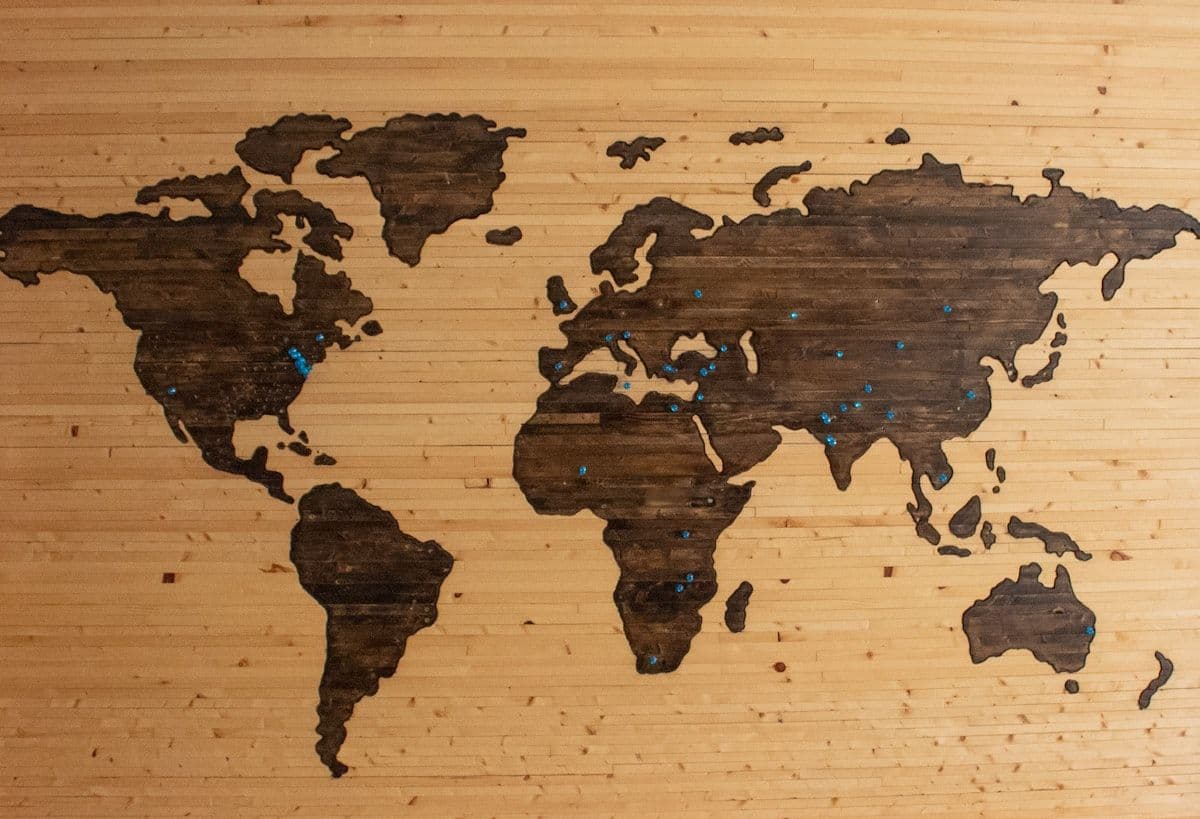
The debate between nearshoring and offshoring has intensified in 2026. Latin America's BPO industry is growing at 12% annually, with Mexico, Colombia, and Argentina emerging as major nearshore hubs. Meanwhile, traditional offshore destinations like India, the Philippines, and Vietnam continue to offer significant cost advantages while rapidly upskilling their workforces in AI and automation.
New entrants including Thailand, Ethiopia, and El Salvador are also disrupting the market, signaling geographic diversification beyond traditional hotspots. For enterprise leaders evaluating outsourcing strategies, the choice between nearshore and offshore is no longer binary. It is a nuanced decision involving cost, risk, talent quality, compliance requirements, and strategic alignment.
This article provides a data-driven framework for comparing nearshore and offshore models across the dimensions that matter most, with specific cost benchmarks and risk assessments for the leading destinations in each category.
Defining the Models: Nearshore, Offshore, and Emerging Alternatives
Before diving into comparisons, let us establish clear definitions:
- Nearshoring: Outsourcing to a neighboring or nearby country, typically within 1-3 time zones. For U.S. companies, this means Latin America (Mexico, Colombia, Argentina, Costa Rica, Brazil). For European companies, this means Eastern Europe (Poland, Romania, Bulgaria, Portugal).
- Offshoring: Outsourcing to a distant country, typically 6-12 time zones away. Traditional destinations include India, the Philippines, and increasingly Vietnam and Malaysia.
- Emerging Hubs: New BPO destinations gaining traction in 2026, including Thailand, Ethiopia, El Salvador, Kenya, and Bangladesh, offering ultra-competitive pricing with developing talent pools.
Cost Comparison by Region: Hourly Rates and Total Cost of Ownership
Raw hourly rates tell only part of the story. Total Cost of Ownership (TCO) includes recruitment, training, management overhead, technology infrastructure, quality assurance, and hidden costs like rework and turnover.
Customer Service Agent (Voice, English-speaking):
- United States (in-house): $22 - $35/hour fully loaded
- Mexico (nearshore): $10 - $16/hour
- Colombia (nearshore): $8 - $14/hour
- Argentina (nearshore): $9 - $15/hour
- India (offshore): $5 - $10/hour
- Philippines (offshore): $6 - $11/hour
- Vietnam (offshore): $5 - $9/hour
- Ethiopia (emerging): $3 - $6/hour
Software Developer (Mid-level):
- United States: $55 - $95/hour
- Mexico: $25 - $45/hour
- Colombia: $20 - $40/hour
- Argentina: $22 - $42/hour
- India: $15 - $30/hour
- Philippines: $12 - $25/hour
- Vietnam: $12 - $28/hour
Data Annotation Specialist:
- United States: $18 - $30/hour
- Nearshore (LatAm): $6 - $12/hour
- Offshore (India/Philippines): $4 - $8/hour
- Vietnam: $4 - $8/hour (with strong AI/ML domain expertise)
- Emerging hubs: $2 - $5/hour
Hidden Cost Factors That Change the Equation
The cheapest hourly rate does not always deliver the lowest total cost. Several hidden factors can erode or even eliminate the apparent cost advantage of offshore locations:
- Management Overhead: Offshore teams typically require 15-25% more management time due to time-zone gaps and communication challenges. Nearshore teams operate in overlapping business hours, reducing management overhead to 5-10%.
- Rework Rates: Communication gaps in offshore arrangements lead to 10-20% higher rework rates for complex tasks. For data annotation projects, rework can cost 30-50% of the original task cost.
- Employee Turnover: India's BPO attrition rate averages 35-45% annually. The Philippines sees 25-35%. Latin American nearshore centers report 15-25% turnover. Each replacement costs 50-100% of the employee's annual salary in recruitment and training.
- Travel Costs: Nearshore destinations require 3-5 hour flights from major U.S. cities at $300-700 per trip. Offshore destinations require 15-24 hour journeys at $1,200-2,500 per trip, plus jet lag recovery time.
- Infrastructure Quality: While India and the Philippines have mature BPO infrastructure, emerging hubs may require additional investment in connectivity, power backup, and office facilities.
Risk Assessment: Nearshore vs Offshore
Data Security and Compliance:
- Nearshore Advantage: Latin American countries increasingly align with U.S. data protection standards. Mexico's LFPDPPP and Colombia's Habeas Data law provide strong frameworks. Easier to conduct in-person audits.
- Offshore Consideration: India's DPDP Act (2023) and Philippines' Data Privacy Act provide robust frameworks, but enforcement varies. Cross-border data transfer agreements require careful legal review.
- Healthcare and Finance: These sectors increasingly prefer nearshore for compliance-sensitive operations. HIPAA, PCI-DSS, and SOX compliance audits are easier with nearshore proximity.
Geopolitical and Economic Stability:
- Low Risk: Mexico, Colombia (improving), India, Philippines, Vietnam, Poland, Romania
- Moderate Risk: Argentina (currency volatility), Brazil (regulatory complexity), Thailand
- Higher Risk: Ethiopia (political instability), El Salvador (institutional concerns), Bangladesh
Time Zone Alignment:
- Nearshore (LatAm to US): 0-3 hour difference. Full business-day overlap enables real-time collaboration, same-day issue resolution, and joint meetings without after-hours commitments.
- Offshore (Asia to US): 9.5-13 hour difference. Limited 2-4 hour overlap window. Asynchronous communication becomes the default, adding 12-24 hours to feedback loops.
- Offshore (Asia to Europe): 4-7 hour difference. Better overlap than Asia-US, making European companies natural clients for Asian offshore providers.
Cultural Compatibility:
- Nearshore Advantage: Latin American culture shares more direct communication styles with North American business norms. This reduces misunderstandings in customer-facing roles. Bilingual (English/Spanish) capabilities serve the growing U.S. Hispanic market (62 million consumers).
- Offshore Consideration: Indian and Filipino professionals excel in formal business English but may have different approaches to conflict resolution, feedback delivery, and deadline communication that require cultural bridge training.
Nearshore Deep Dive: Top Destinations in 2026
Mexico
- BPO workforce: 700,000+ agents
- Key cities: Monterrey, Guadalajara, Mexico City, Queretaro
- BPO employment growth: +25% since 2024
- Strengths: USMCA alignment, bilingual talent, strong IT infrastructure, proximity to U.S.
- Best for: Customer service, IT helpdesk, financial services BPO
Colombia
- BPO workforce: 600,000+ agents
- Key cities: Bogota, Medellin, Barranquilla, Cali
- Government incentives: Free trade zones with 15% corporate tax rate (vs. 35% standard)
- Strengths: Neutral Spanish accent, growing English proficiency, cost competitiveness
- Best for: Customer experience, back-office processing, content moderation
Offshore Deep Dive: Established and Emerging Players
India
- BPO exports: $44+ billion annually
- Workforce: 5+ million BPO professionals
- Strengths: Unmatched scale, deep domain expertise, mature industry ecosystem
- Challenges: Rising wages (8-12% annual increases), high attrition (35-45%), increasing competition from emerging hubs
- Best for: Large-scale operations, IT services, financial processing, knowledge process outsourcing
Vietnam
- BPO growth rate: 15-20% annually
- Key cities: Ho Chi Minh City, Hanoi, Da Nang
- Strengths: Strong STEM education, competitive costs ($5-9/hour for skilled work), rapidly growing AI/ML talent pool
- Specialization: AI data services, software testing, data annotation - providers like SyncSoft.AI combine BPO delivery with AI expertise
- Best for: AI data services, software development, quality assurance, data annotation
Decision Framework: How to Choose the Right Model
The nearshore vs offshore decision should be driven by your specific requirements across five dimensions:
- If real-time collaboration is critical (agile development, customer-facing CX): Choose nearshore. The time-zone alignment advantage alone is worth the 30-40% cost premium over offshore.
- If cost optimization is the primary driver (high-volume back-office, data processing): Choose offshore. India, Philippines, and Vietnam offer 50-70% savings with mature delivery capabilities.
- If compliance is non-negotiable (healthcare, financial services): Prefer nearshore for patient/customer-facing operations. Offshore is acceptable for back-office with strong compliance frameworks.
- If specialized AI/data skills are needed: Vietnam and India lead in AI data services. Vietnam's emerging AI ecosystem, with companies like SyncSoft.AI, offers compelling quality-to-cost ratios.
- If maximum flexibility is required: Build a hybrid model with nearshore for CX and compliance-sensitive work plus offshore for cost optimization and scale.
The Hybrid Model: Best of Both Worlds
The most sophisticated enterprises in 2026 are not choosing between nearshore and offshore. They are building hybrid delivery networks that leverage the strengths of each model. A typical hybrid configuration includes nearshore operations for customer-facing functions (35-40% of outsourced work), offshore operations for back-office and data processing (45-50%), and onshore retained capabilities for strategy, oversight, and compliance (10-15%). This multi-geography approach optimizes cost while maintaining quality and compliance standards. Enterprise leaders who master this hybrid model will build the most resilient and cost-effective outsourcing strategies for the decade ahead.
Conclusion
The nearshoring vs offshoring debate in 2026 is no longer about choosing one over the other. It is about building an intelligent, multi-geography outsourcing strategy that matches each function to the optimal delivery location. Latin America's 12% annual growth validates nearshoring's value proposition for time-sensitive, compliance-critical, and customer-facing work. Meanwhile, Asian offshore destinations continue to offer unmatched scale and cost efficiency for high-volume operations. The winners will be enterprises that think beyond simple cost comparisons and evaluate total cost of ownership, risk profiles, talent quality, and strategic alignment. The data is clear: the right answer is almost always a thoughtful combination of both.