SyncSoft.AI
·

In our recent analysis of why robotics companies are outsourcing back-office operations, we outlined five key functions that hardware startups and manufacturers are moving to specialized BPO partners. Of those five, one function is growing faster than all others combined: technical support for Robotics-as-a-Service (RaaS) platforms. With ABI Research projecting 1.3 million RaaS deployments generating $34 billion in revenue by 2026, the support infrastructure required to keep those robots running is becoming the single largest operational cost that most robotics companies never planned for.
This article dives deep into the economics of robot fleet support — the real numbers behind Tier 1, Tier 2, and Tier 3 technical support — and makes the case for why Vietnam-based outsourcing partners like SyncSoft AI are becoming the go-to solution for RaaS providers who need enterprise-grade support without enterprise-grade budgets.
The RaaS model is elegant in theory: customers pay a monthly subscription, and the provider handles everything — the robot hardware, software updates, maintenance, and technical support. ABI Research forecasts that customized RaaS solutions will account for nearly 40% of the market by 2026, meaning providers must support increasingly complex, industry-specific deployments across warehousing, manufacturing, healthcare, and logistics.
But here is the math that keeps RaaS CFOs awake at night. A warehouse AMR fleet of 50 robots generates an average of 15-25 support tickets per week — ranging from simple recalibration requests to complex navigation failures requiring remote diagnostics. A single Tier 2 support engineer in the United States commands a fully-loaded cost of $95,000-$130,000 annually. A Tier 3 escalation engineer with robotics-specific expertise costs $140,000-$180,000. To provide 24/7 coverage across US and European time zones, you need a minimum of 8-12 support engineers per shift rotation. That is $1.2-$1.8 million per year in support costs alone — before you have shipped a single robot.
For a Series B RaaS startup burning through a $30 million funding round, dedicating 4-6% of total capital to support infrastructure before achieving product-market fit is a painful trade-off. Yet skipping it is not an option. In the subscription model, downtime directly translates to churn. When a customer's warehouse robot stops picking orders, they are losing $2,000-$5,000 per hour in productivity. Miss the SLA, and you lose the contract.
Before examining outsourcing economics, it helps to understand what robot fleet support actually involves. Unlike software support, where a restart often fixes the problem, robot support deals with physical systems interacting with unpredictable environments.
Tier 1 handles initial ticket intake, known-issue resolution, and basic troubleshooting. For robot fleets, this includes remote reboot commands, sensor recalibration walkthroughs, error code lookup, and status monitoring. Approximately 60-70% of all support tickets can be resolved at Tier 1 with proper documentation and training. This is the tier with the highest outsourcing ROI because it is volume-driven and process-dependent — exactly the kind of work where Vietnam-based teams excel.
Tier 2 handles issues that require deeper technical knowledge: navigation algorithm anomalies, sensor fusion conflicts, network connectivity problems, and integration issues with warehouse management systems. These engineers need training on specific robot platforms and access to remote diagnostic tools. About 20-25% of tickets reach Tier 2, and resolution often involves analyzing telemetry data, reviewing log files, and coordinating with the customer's IT team.
Tier 3 is reserved for issues that may indicate firmware bugs, hardware defects, or edge-case failures requiring engineering intervention. Only 5-10% of tickets escalate to Tier 3, and these typically remain with the provider's in-house engineering team. However, even Tier 3 benefits from outsourced support — when Tier 1 and Tier 2 effectively filter and document issues, Tier 3 engineers receive clean, well-documented escalations rather than raw customer complaints, reducing their resolution time by 30-40%.
Vietnam's BPO market is projected to exceed $3.6 billion by 2028, growing from $2.5 billion in 2024. The country has become a top-tier destination for technical support outsourcing — not just because of cost savings, but because of a rapidly maturing talent pool in STEM fields. Vietnamese universities graduate over 50,000 engineering and IT students annually, creating a deep bench of technically capable support professionals.
Here is how the cost comparison breaks down for a RaaS provider supporting 200 deployed robots across US and EU customers, requiring 24/7 coverage:
For a US-based support team, you would need approximately 4 Tier 1 agents at $55,000 each ($220,000), 3 Tier 2 engineers at $110,000 each ($330,000), and 1 Tier 3 escalation lead at $160,000 ($160,000) — totaling $710,000 annually for a single shift. For 24/7 coverage requiring three shifts, the total reaches approximately $2.1 million per year.
With a Vietnam-based outsourcing partner like SyncSoft AI, the same structure costs approximately: 4 Tier 1 agents at $12,000-$18,000 each ($48,000-$72,000), 3 Tier 2 engineers at $24,000-$36,000 each ($72,000-$108,000), and 1 Tier 3 triage coordinator at $36,000-$48,000 ($36,000-$48,000) — totaling $156,000-$228,000 per shift, or $468,000-$684,000 for full 24/7 coverage. That represents a 55-67% cost reduction while maintaining equivalent service quality.
SyncSoft AI offers flexible pricing models tailored to RaaS operational patterns: per-ticket pricing for early-stage providers with unpredictable volume, per-hour pricing for providers scaling fleet deployments, and dedicated team arrangements for mature RaaS operators with steady support demand. This flexibility means robotics companies only pay for what they use during the critical growth phase when every dollar of runway matters.
The most common objection to outsourcing technical support is quality. Robotics companies worry — rightly — that offshore support teams will lack the domain expertise to handle complex hardware-software issues. This is where SyncSoft AI's QA-first approach makes the difference.
Every support interaction flows through a multi-layer quality process. Initial ticket handling is monitored by team leads who review response accuracy and adherence to resolution protocols. Automated QC checks validate that diagnostic steps are followed in the correct sequence and that all required telemetry data is collected before escalation. Weekly quality audits measure first-contact resolution rate, average handling time, customer satisfaction scores, and escalation accuracy. SyncSoft AI maintains 95%+ accuracy targets across all support tiers, with Inter-Annotator Agreement tracking adapted for support consistency — ensuring that any two agents would resolve the same ticket in the same way.
For robotics-specific support, SyncSoft AI develops custom knowledge bases and decision trees for each client's robot platform. Our teams receive hands-on training with the client's diagnostic tools, and we establish continuous feedback loops between our QA team and the client's engineering department. This means our support quality improves over time as we accumulate domain expertise specific to each robot product line.
Here is something most RaaS providers do not realize until they outsource support: a well-run support operation generates enormously valuable data. Every ticket, every diagnostic log, every customer interaction contains signals about product reliability, common failure modes, and usage patterns.
SyncSoft AI's data processing capabilities transform raw support data into structured product intelligence. Our pipelines ingest multi-format data — ticket logs, chat transcripts, telemetry dumps, sensor readings, and customer feedback — cleaning and structuring it into analysis-ready datasets. For RaaS providers, this means getting monthly reports on failure mode frequency, mean time between failures by robot model and deployment environment, geographic and seasonal patterns in support volume, and feature requests and usability issues aggregated from customer interactions.
This data processing layer turns your support operation from a cost center into a product improvement engine. Engineering teams receive structured insights rather than anecdotal feedback, enabling data-driven decisions about firmware updates, hardware revisions, and feature priorities.
If you are a RaaS provider evaluating outsourced support, here are the non-negotiable criteria based on what we have seen work across multiple robotics clients. First, demand a provider with multi-layer QA — single-pass review is not sufficient for technical support where errors have real-world physical consequences. Second, ensure the provider can handle your data formats. Robot telemetry comes in proprietary formats, and your support partner needs pipelines that ingest LiDAR logs, IMU data, camera feeds, and motor telemetry without manual conversion. Third, look for flexible pricing that matches your growth trajectory — you should not be locked into a 50-person team contract when you have only deployed 30 robots.
Finally, choose a partner that can scale with you. SyncSoft AI's Vietnam-based operations can ramp team size by 30-50% within weeks — a critical capability for RaaS providers experiencing the explosive fleet growth that defines this $34 billion market. When your next enterprise customer signs a 500-robot deployment, your support infrastructure needs to scale overnight, not over quarters.
The RaaS revolution is not just about building better robots — it is about building the operational infrastructure to support them at scale. With 1.3 million deployments projected by 2026, the providers who win will be those who deliver 99.9% uptime at sustainable unit economics. Outsourcing technical support to Vietnam-based partners like SyncSoft AI is not a compromise — it is the competitive strategy that turns a $2.1 million annual cost center into a $684,000 investment that actually generates better product intelligence along the way.
The math is clear. The quality is proven. The only question is whether your robotics company will capture this advantage before your competitors do.
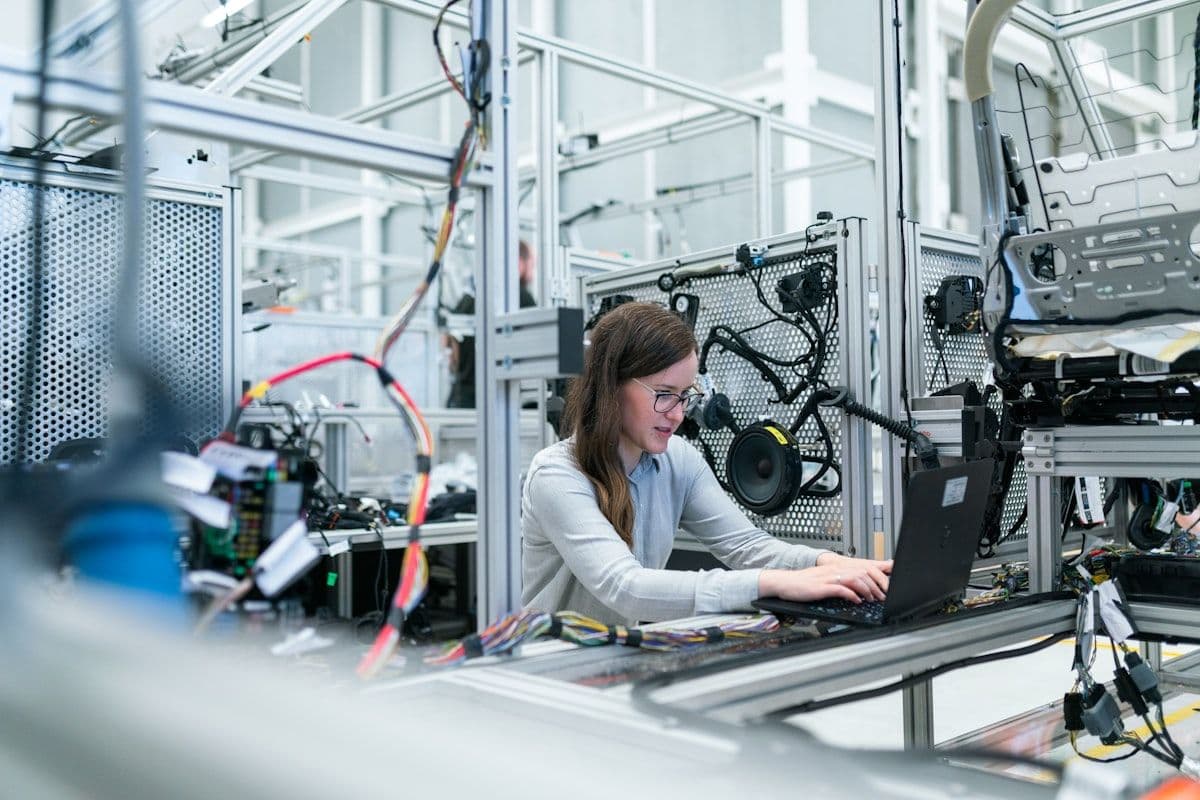
As the global robotics market surges past $80 billion, robotics startups and manufacturers are turning to specialized BPO partners for manufacturing support, quality testing, supply chain management, and customer support — cutting costs by 40-60% while scaling faster than ever.

A comprehensive analysis of the $358.58 billion BPO market in 2026, with data-driven breakdowns by region, industry sector, and growth projections through 2033.

Healthcare BPO is projected to reach $734.86 billion by 2030 at a 14.7% CAGR. Explore the forces driving this boom including medical coding transitions, RCM outsourcing, and AI-powered claims processing.
